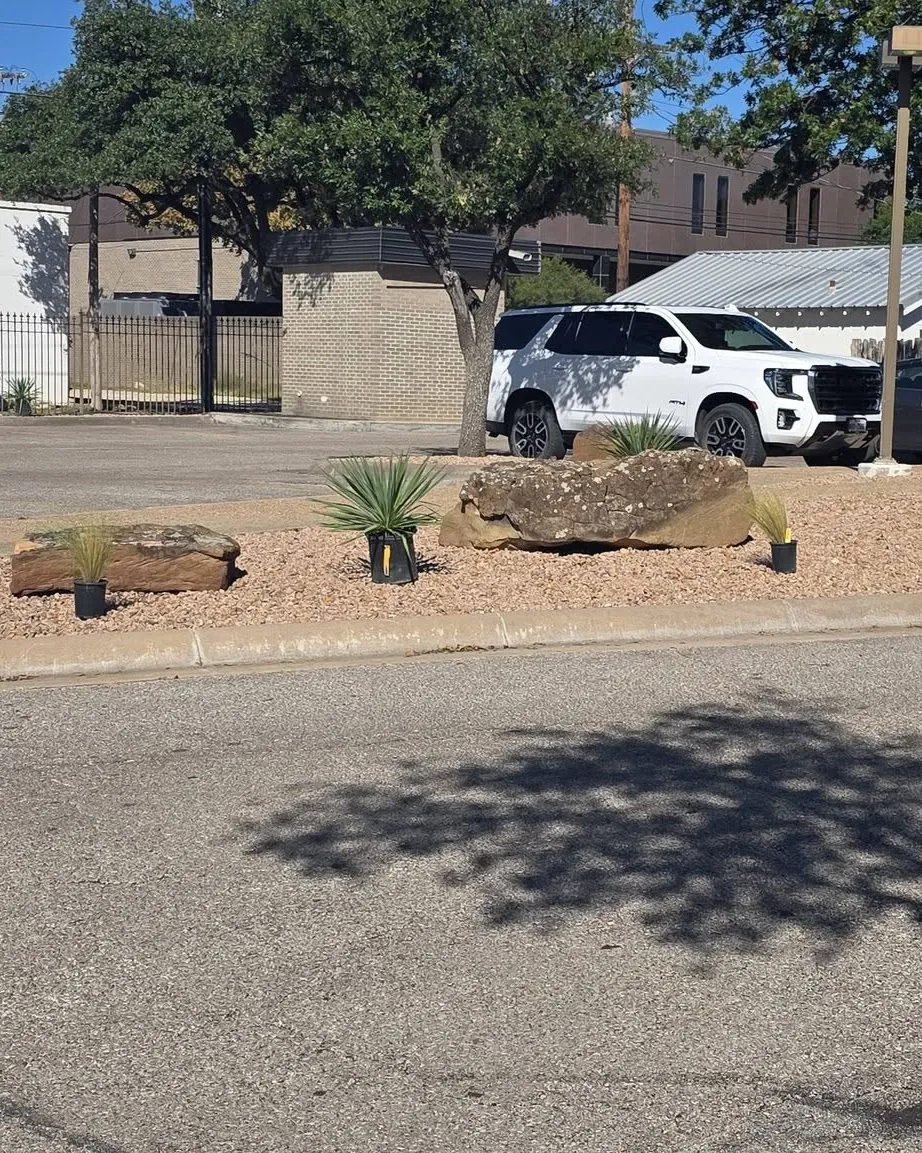
Xeriscape (you will also hear it called zeroscape or xeroscape) means landscaping that needs little or no supplemental water. San Angelo gets roughly 20 inches of rain in a typical year and summers that bake anything that is not built for them. Xeriscaping works with that instead of fighting it. Done right, it is not a yard full of bare gravel: it is layered beds of yucca, sotol, sages and ornamental grasses, natural stone, clean rock and smart drip irrigation, with color through most of the year.
Xeriscape is also a great partner for sod. Keep a healthy patch of grass where you actually use it, and turn the slopes, strips, side yards and corners that are hard to water into beds that take care of themselves.
Why San Angelo property owners go xeric
- Lower water use. Native and adapted plants need far less supplemental water once established.
- Less upkeep. No weekly mowing, edging or fertilizing in xeriscaped areas.
- Drought-ready. Beds stay attractive through watering restrictions and long dry spells.
- Year-round structure. Boulders, rock and evergreen yuccas and sotol keep their shape all winter.
- Curb appeal. Clean lines and natural stone suit West Texas homes and businesses.
Plants we like for the Concho Valley
Every site is different, but these are the kinds of tough, good-looking plants we design with:
- Yucca & red yucca
- Sotol
- Agave
- Texas sage (cenizo)
- Ornamental grasses
- Autumn sage
- Lantana
- Prickly pear
- Blackfoot daisy
- Desert willow
Materials
- Sandstone & limestone boulders
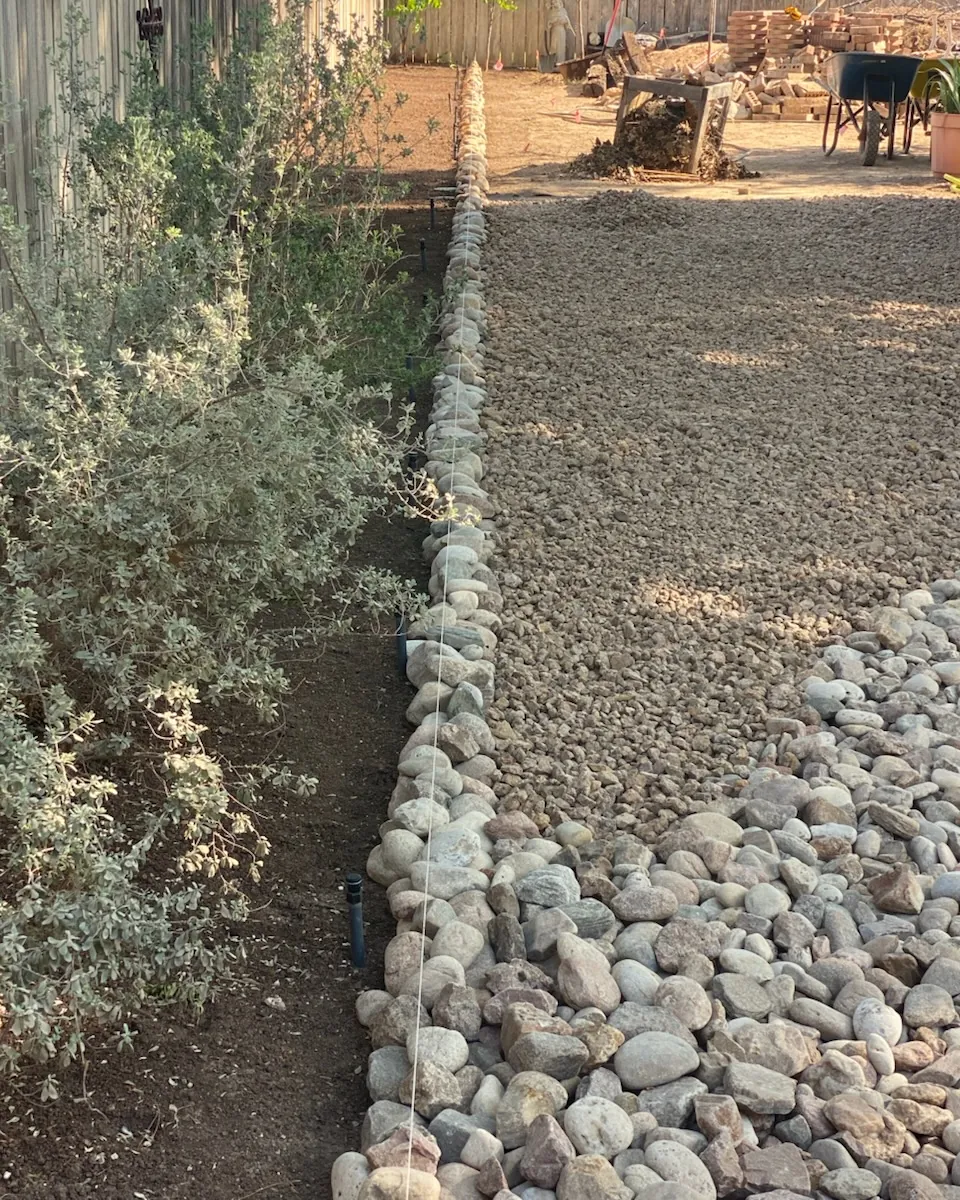
- Decorative gravel & river rock
- Crushed granite paths
- Steel or stone edging
- Landscape fabric
- Drip irrigation
Xeriscape vs. sod? Often both.
Keep a healthy patch of sod where kids and dogs play, and xeriscape the slopes, strips and corners that waste water. It is one of the most cost-effective upgrades in West Texas.
Xeriscape questions
What is xeriscaping?
Xeriscaping is landscaping designed to need little or no supplemental water. It combines drought-tolerant and native plants, decorative rock or mulch, smart grouping of plants by water need and efficient drip irrigation.
Is xeriscape just rocks and cactus?
No. A good xeriscape has color, texture and shade: yuccas and sotol, ornamental grasses, sages, flowering perennials, boulders and gravel. It can include a small, practical patch of lawn where you actually use it.
Does xeriscaping save money?
Most property owners see lower water bills and spend less time and money on mowing, fertilizer and replanting once the plants are established. Installation costs vary with the materials you choose.
What plants do you use in San Angelo xeriscapes?
We choose plants that handle Concho Valley heat, wind, freezes and alkaline soil, such as yuccas, sotol, agave, Texas sage, ornamental grasses and drought-hardy perennials, matched to sun exposure and the look you want.
Can I combine sod and xeriscape?
Yes, and it is often the smartest design for West Texas. Put sod where kids, pets and gatherings need it, then convert slopes, strips, corners and hard-to-water areas to xeriscape beds.
Do xeriscape beds need irrigation?
New plants need water while they establish. Many beds use simple drip lines that put water at the roots with little waste. Once established, many xeriscape plants need only occasional deep watering in long dry spells.
Do you do commercial xeriscape?
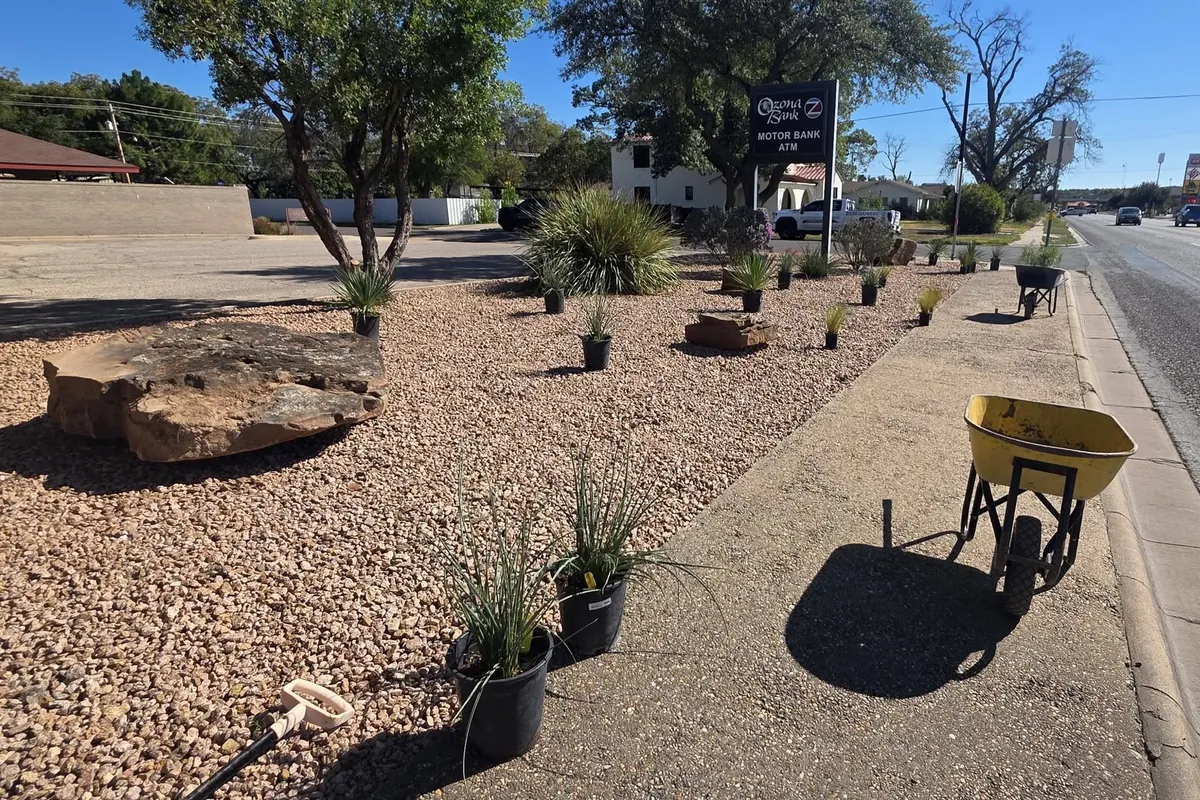
Yes. For example, we installed boulders, decorative rock and drought-tolerant plantings at the Ozona Bank Motor Bank in Ozona. Commercial xeriscapes stay sharp with far less mowing and watering.
How do you keep weeds out of rock beds?
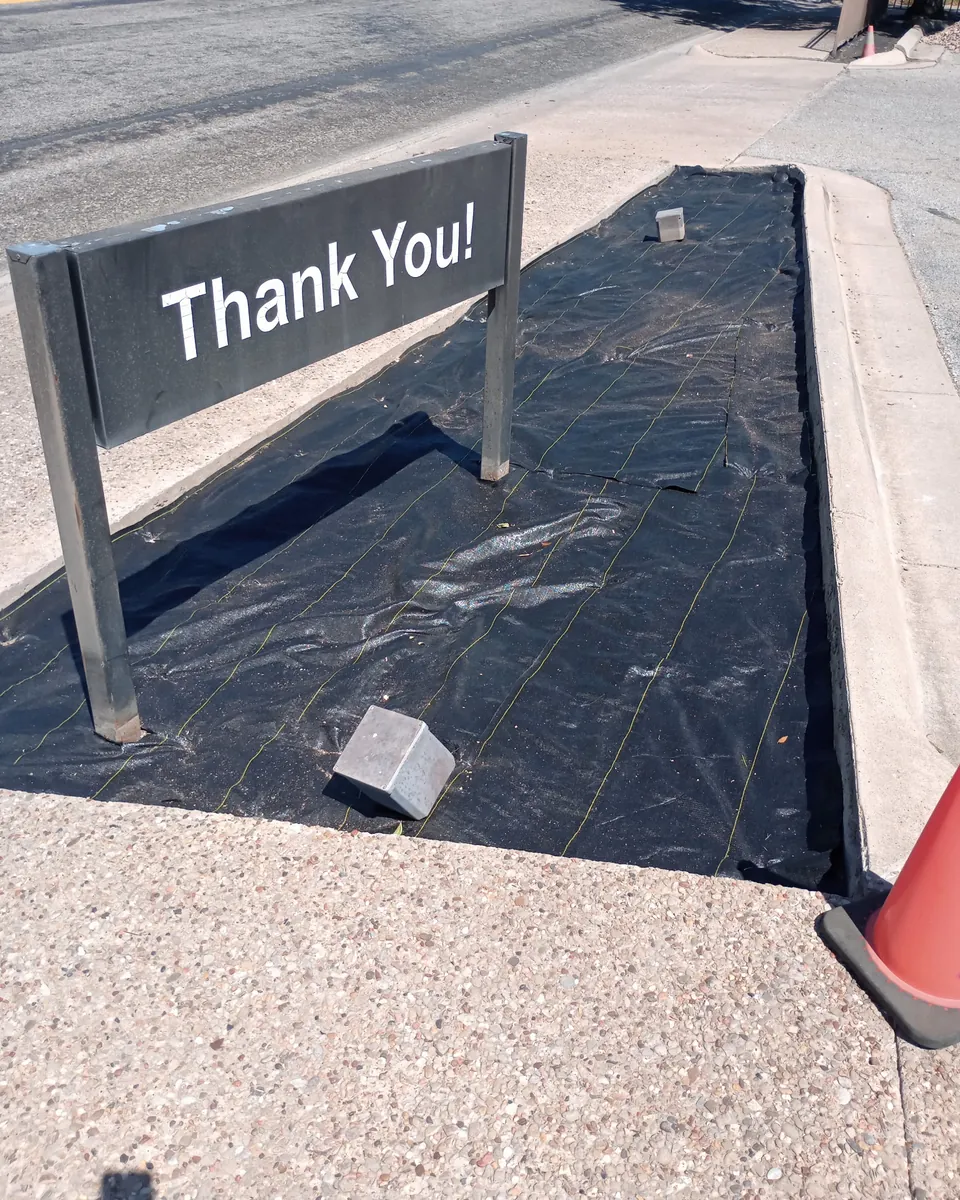
Weed control starts with preparation: clearing existing weeds, grading, quality landscape fabric where appropriate and the right depth of rock. Occasional maintenance keeps it clean afterwards.